


Long-Sleeve Merino Hoodie
Long-Sleeve Merino Hoodie
A 100% merino wool hoodie born from a PCT thru-hike
- Composite water-repellent treatment: Repels water while still absorbing moisture—merino wool functionality at its best.
- High thermal performance: Air trapped between fibers maintains warmth even when wet.
- Moisture management: The fibers absorb and release moisture for sustained comfort.
- Natural antibacterial and odor resistance: Made for extended wear on long trails.
-
Hooded: Adds wind and cold protection plus shade from the sun.
1点でのご注文時の送料です。ご注文の合計が240g以上になると宅急便(¥800)になります。
Development story
Development story
Design concept
Design concept
Functional details
Functional details
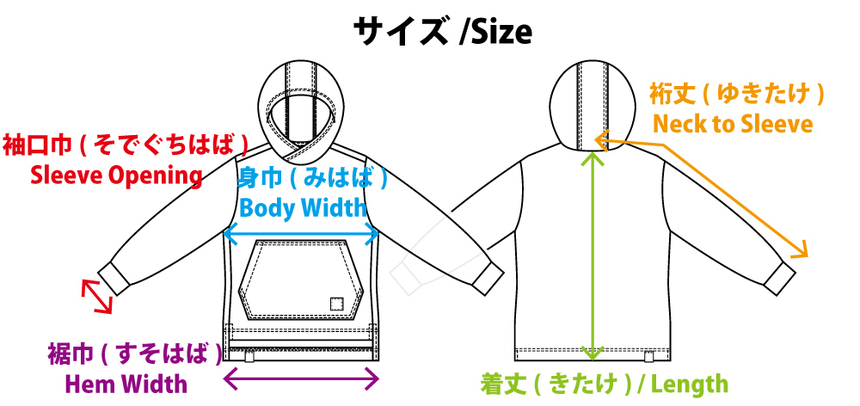
Size, Spec & Material
Size, Spec & Material
Notes
Notes
About shipping
About shipping
Domestic Shipping
- Methods: Click Post, Yamato Transport, or Sagawa Express
- Fee: Calculated at checkout
- Dispatch: Usually within 2–5 business days of the order
- Tracking: A tracking number is emailed after dispatch
International Shipping
- Method: Japan Post EMS
- We ship internationally to selected regions
- Transit: 7–14 business days


Long-Sleeve Merino Hoodie
¥25,960
Development Story / 開発ストーリー
Introduction I realized the importance of materials when I started mountain climbing while cycling around Japan. As a high school student, I didn't have much money, so I wore ordinary sportswear. However, I remember being impressed by the comfort of mountaineering equipment when I started climbing mountains while cycling around Japan. For long trips, you need to minimize your gear as much as possible. Is there a versatile garment that's comfortable even in hot or cold weather, and that you can wear all the time? Polyester dries quickly, but it leaves a lingering musty smell. That's when I discovered wool underwear. It doesn't get smelly even after wearing it for days, it keeps you warm even when it rains, and for some reason, it keeps you cool even when it's hot. It's truly a material that you can use forever. It felt like a second skin that I could wear forever. As I wore wool clothing from various manufacturers, I began to appreciate the differences and depth of wool, and I searched for the best wool that I could wear throughout long-distance trails. Animal fibers such as wool have evolved to withstand harsh environments, and not only do they withstand changes in the outside air, but they also have a functionally superior structure. It can be said that animal fibers, which have evolved over hundreds of millions of years, possess superior functions that cannot be achieved with synthetic fibers. Sheep are believed to have been domesticated in ancient Mesopotamia around 7000 BC, and the Merino breed was developed in the 1st century. Wool has been continuously improved for over 9000 years. Furthermore, the Industrial Revolution led to the maturation of spinning technology, making it possible to produce thin yet durable fabrics like those we have today. In other words, modern wool is a fiber with an ancient and romantic history, with its development beginning 9,000 years ago. Wearing photos Male model Wearing size: L Color: Dark Navy Height: 173cm Weight: 63kg My usual size is M or L Female model Wearing size: XS Color: Heather Gray Height: 150cm Weight: 46kg My usual clothing size is S Development Notes - My experiences walking the PCT 4200km - While wool has many wonderful advantages, it also has its drawbacks. At MIYAGEN, we have devised ways to overcome these disadvantages. During the development process, we considered what should be prioritized, whether we should stick to 100% wool, or whether we should also incorporate the advantages of synthetic fibers. First, we re-evaluated the advantages and disadvantages of selecting wool fabrics. The advantages of wool are as follows: - Has high heat retention - Moisture-wicking and provides a comfortable wearing experience. - Has deodorizing and antibacterial properties - Excellent UV protection performance The disadvantages of wool are as follows: - It has a prickly feeling. - Tendency to shrink (felting) - It is prone to wear and tear and has durability issues. - Susceptible to insect damage - Low quick-drying properties There are constraints on wool production, which contribute to higher costs. Even within these constraints, the finest selected wool fabrics were so expensive during development that we wondered whether we should even sell them. However, the feeling I got from walking 4200km from desert to glacier on the Pacific Crest Trail was amazing, and it made me realize once again the high quality of this wool fabric. Although the product price will be higher, we decided to sell it to everyone in order to share the comfort of this 100% wool garment, its versatility for all situations, and the appeal of wool. Merino wool fibers certified by a third-party organization We selected fabrics from a long-established Italian fabric manufacturer with over 100 years of history. Through automation and the establishment of research facilities, they provide uniform, high-quality, and highly functional wool fabrics. It is one of the top companies among wool fabric manufacturers. We handle all processes from sourcing raw wool at our own farm in New Zealand to spinning and weaving, focusing on thorough control of raw wool and transparency in our sourcing. We are actively engaged in environmentally conscious practices, establishing production systems that include decomposing dyes and returning them to nature, as well as utilizing solar energy to operate our factories. We have obtained numerous certifications from third-party organizations committed to environmental protection and are working towards achieving the SDGs. MIYAGEN Trail Engineering uses "Super 120" merino wool, a particularly fine yarn, and because it uses long-fiber wool, it is very lint-free. It is incredibly soft and comfortable to wear, unlike any other wool you might expect, with no itchiness. Wool that has evolved to repel water, yet absorbs it, in order to survive. Wool contains a cuticle (also called scales or pith). This cuticle is hydrophobic, while the cortex (protein portion) beneath it is hydrophilic. The water-repellent cuticle covers the water-absorbing cortex, creating a unique multi-layered structure in wool. This multi-layered structure is wool's greatest characteristic. Furthermore, the hydrophobic cuticle surface traps tiny air pockets between the fibers, which reduces thermal conductivity and helps maintain body temperature. The presence of cuticles gives wool several unique characteristics not found in other fibers. - It can repel water while also absorbing it. - It retains heat well even when it absorbs water, and the fibers "breathe". - Stain resistant - Possesses excellent flame retardancy and fire resistance. - Durable and highly elastic - It has shape memory properties. - Easy to spin yarn Quoted from The Woolmark Company (https://www.woolmark.jp/fibre/) A special multi-step shrink-proofing process that preserves the cuticle. Another important characteristic of cuticles and scales is their "felting ability." When wool absorbs moisture, its scales open up and become more prone to entangling with surrounding wool fibers, leading to felting. This is the reason sweaters shrink when washed. Furthermore, the back of a backpack has conditions that facilitate felting, and this phenomenon can become a troublesome problem in outdoor settings. While wool is treated to prevent shrinkage, excessive removal of scales can increase its hydrophilicity, compromising its inherent properties. On the other hand, resin coating methods significantly reduce the unique advantages of wool. Therefore, MIYAGEN's wool products undergo a "multi-layer shrinkage prevention process" that involves multiple steps at each stage of the cotton, yarn, and fabric production. This special multi-layer shrinkage prevention process makes it possible to maximize the properties of wool, such as moisture absorption and quick drying, breathability, heat retention, and antibacterial and deodorizing properties. Furthermore, this processing results in a fabric that is less prone to shrinking and pilling on the back of the backpack, and also boasts excellent abrasion resistance. In addition, this superior multi-layer shrink-resistant treatment allows the garment to withstand drying after washing in a standard electric or gas dryer. Photos of the production factory and development process. This product is entirely manufactured in a Japanese sewing factory. From pattern making and cutting to sewing and finishing, it is produced at our partner factory in Okazaki City, Aichi Prefecture. Skilled pattern makers developed three-dimensional patterns, numerous samples were created, and the product finally reached the point of being sold. Because it's a small brand, production runs are small, but they said they would love to cooperate if a brand like this was starting in Okazaki City. I had the pleasure of visiting the factory multiple times and watching the clothes being carefully and beautifully made. I learned that this jersey fabric is stretchy, so sewing it requires a great deal of skill. They also mentioned that it's a very expensive fabric, so they take great care in cutting and sewing it. Aichi Prefecture was once a thriving center for the textile industry. Companies like Toyota Motor Corporation, Aisin Seiki, and Brother Industries produced looms, sewing machines, and other machinery, contributing to Aichi's development and subsequent expansion into the automotive and aerospace industries. However, rising labor costs led to the decline of the textile industry, with most production relocating overseas. Sewing is always done by hand; clothes sewn automatically by robots are virtually nonexistent. While rising labor costs lead to an increase in overseas products, I have great respect for Japan's textile industry and its technological capabilities, which have supported its development. I felt truly fortunate to have encountered a factory like this.

Design Concept / 設計コンセプト
Merino wool fibre certified by an independent third party. We selected fabric from an Italian mill with more than 100 years of history. Through automation and dedicated research facilities, the mill produces uniform, high-quality wool fabric with excellent performance — one of the top names in the wool-fabric world. They run the entire chain themselves, from sourcing raw wool at their own farm in New Zealand through spinning and weaving, with rigorous management of the raw wool and full transparency about where it comes from. They actively pursue environmental initiatives — breaking down dyes and returning them to nature, running their plants on solar energy, and similar production practices — and have built that into their system. They have received many certifications from third-party bodies focused on environmental stewardship, and they actively pursue SDGs goals. The wool used by MIYAGEN Trail Engineering is from "Super 120" — a particularly fine yarn even within merino — selected for its long-staple fibre, which means very little pilling. It is so soft and so free of itchiness that it doesn't feel like wool.
A fibre that evolved to live: wool that repels water yet absorbs water Wool has a cuticle (also called scales). The cuticle is hydrophobic, while the cortex (the protein structure underneath it) is hydrophilic. The hydrophobic cuticle covers the hydrophilic cortex, giving wool a uniquely layered structure. This layered structure is wool's biggest characteristic. In addition, a thin layer of air is held between fibres on the hydrophobic surface of the cuticle, which lowers thermal conductivity and helps retain body heat. Because of the cuticle, wool offers a list of features no other fibre has:
Repels water yet can absorb water
Stays warm even when it has absorbed water; the fibre "breathes"
Resists soiling
Excellent flame and fire resistance
Hard to break, with strong elasticity
Shape memory
Easy to spin into yarn
Quoted from The Woolmark Company (https://www.woolmark.jp/fibre/).
A special multi-stage shrink-resist treatment that preserves the cuticle The cuticle and scales have another important property: "felting performance." When wool absorbs moisture, the scales open and the surrounding wool fibres tangle more easily, so felting progresses. The reason a sweater shrinks in the wash is exactly this opening of the scales. The back panel of a backpack also has all the conditions for felting to progress, which can be a real problem in the outdoors. Wool is normally treated to resist shrinkage, but if too much of the scales is removed, the fabric becomes too hydrophilic and loses some of wool's native characteristics. Resin-coating approaches, on the other hand, halve the very benefits that make wool wool. For MIYAGEN's wool products, we apply a multi-stage shrink-resist treatment across cotton, yarn, and fabric stages. This special multi-stage treatment lets us bring out wool's strengths — moisture-wicking, breathability, warmth retention, antibacterial and odour-control — to the fullest. It also produces a fabric that doesn't shrink or pill easily even on the back of a backpack, with very high abrasion durability. Because of this treatment, the fabric also handles standard household electric or gas dryers after washing.
This product is fully made at sewing factories in Japan. Pattern making, cutting, sewing, and finishing all happen at our partner factory in Okazaki, Aichi. A skilled patternmaker developed the three-dimensional pattern; many samples were made before we reached the version we now sell. Being a small brand we order in small lots, but the factory said: "If a brand like yours is starting in Okazaki, we want to help you make it." It's been a pleasure to visit them many times and watch carefully made garments come together. They told us that, because this jersey-knit fabric stretches, it requires very high skill to sew — and because the fabric is very expensive, they're especially careful with cutting and stitching. Aichi was once a thriving textile region. Toyota, Aisin, and Brother produced looms and sewing machines, and the area grew from textiles into automobiles and aerospace. As labour costs rose, the textile industry contracted and most of it moved overseas. Sewing is always done by human hands; clothes that are fully sewn by robots barely exist. As labour costs go up and overseas products take more share, we have deep respect for the textile industry and its skill — the industry that supported Japan's development. It's a real piece of luck that we found this factory.
Function & Detail / 機能ディティール
Designed for long trails A design that is easy to use for a long time. The first feature of this long-sleeved merino hoodie is its articulated hood and large kangaroo pocket. On long trails, you walk in fields exposed to direct sunlight for extended periods. A hoodie is included to protect your head from sunburn. The wool material offers excellent moisture-wicking and light-blocking properties, keeping you cool even with the hood on and protecting your skin from strong sunlight. It keeps you cool in the summer and warm in the winter, making it suitable for use in any field, regardless of the season.
Main body
We've made it slightly oversized to allow for easier movement in the field. We focused on creating a pattern that can be worn not only for hiking but also for everyday wear. We use simple stitching to reduce the number of threads and minimize any feeling of tightness. Although it's a simple pattern, it's designed using three-dimensional cutting, with a larger back and a smaller front. Furthermore, the back is made longer to prevent it from riding up when bending or squatting. Furthermore, the sleeves are equipped with ribs, making it easy to roll up the sleeves and secure them to the arm.
Hoodie
This hood was designed to protect against strong sunlight and wind. Furthermore, the hood is a feature that the Inuit people have used for centuries to protect themselves from the cold. The Inuit are a people who live in cold, windy, and sunny regions. In other words, the hood is a crucial feature that proves its worth in harsh environments. Windbreak Sunshade
Cold weather protection
Incorporating these three functions, the hood design features a three-piece structure and is engineered to conform to the shape of the head, ensuring that the hood does not obstruct your vision even when you move your head widely or are buffeted by the wind. An elastic cord runs around the hood, allowing you to tie and secure any excess fabric. The elastic cord is sewn in at both ends to prevent it from getting caught on branches or other objects, and to prevent it from getting tangled with other clothes in the washing machine.
Kangaroo pocket
Kangaroo pockets have long been used to prevent hands from getting cold, and are also known as muff pockets or hand warmer pockets. Furthermore, the placement of the pockets is also important. The abdomen is one of the warmest parts of the body, making it the ideal place to warm your hands. You can also keep your stomach warm by putting a towel or a hand warmer in the kangaroo pocket. Furthermore, you can use your body heat to make cold meals (hiking meals that don't require gas). You can use it however you like: put a water bottle in your pocket to carry to a water source that's a bit far away, or use the water bottle to cool yourself down...the possibilities are endless. While some companies might cut costs by using a different fabric for the pockets, we prioritized warmth and insisted on using wool for all parts.
Specs & Materials / スペック・素材
| Product Name | Long Sleeve Merino Hoodie | |
|---|---|---|
| Product No. | 12020002 | |
| Weight | 310 g | |
| Material | Jersey-knit, 100% merino wool (195 g/m²) | |
| Size | S, M, L, XL (unisex) | |
| Dimensions (cm) | Length | S 66 / M 68 / L 71 / XL 74 |
| Body Width | S 54 / M 57 / L 60 / XL 64 | |
| Hem Width | S 51 / M 54 / L 57 / XL 61 | |
| Neck to Sleeve | S 78 / M 80.5 / L 83 / XL 85.5 | |
| Sleeve Opening | S 10.5 / M 11.0 / L 11.5 / XL 12.0 | |
| Fit example | Male model (173 cm / 63 kg) wearing size L. Usually wears M or L. | |
| ※ Expect a few percent of shrinkage in the first wash. | ||
| Made in | Okazaki, Aichi, Japan | |
| Updated 2025/01/13 — Model change from January 2025 | ||
| • XS is discontinued and XL is newly added. | ||
| • The front-side logo has been removed. | ||
| • The pattern is unchanged from the previous version. | ||
| • Matcha and Azuki are added as new colours; Heather Grey is discontinued. | ||
Field Photo / フィールドフォト


Caution / 注意事項
Product maintenance and storage You can extend the lifespan of your product by doing the following: About laundry - Please use a laundry net when washing. - When first used, it may have a characteristic animal-like smell of wool. - Merino wool has odor-eliminating and antibacterial properties, so it doesn't need to be washed frequently. However, if sweat and oil accumulate, sand and dirt will build up, which will accelerate wear and tear and cause significant damage to the fibers. Please wash after activities. - If using a washing machine, place the item in a laundry net and wash it on a delicate cycle. About detergents - Please wash using a neutral detergent. - If heavily soiled, please wash with a mild alkaline detergent or oxygen-based bleach. - Never use chlorine bleach, as it will dissolve wool. - Do not dry clean. About dryness - The dyes used in the wool will fade due to ultraviolet light. Please dry it in a shady, well-ventilated place. - Using a hanger will help clothes dry with fewer wrinkles. - Iron at a low temperature (around 60 degrees Celsius). Regarding the use of a washer-dryer (electric or gas) - Although the care label has a "do not tumble dry" symbol, it can be safely put in a dryer. - When using a dryer, a low temperature setting (60°C or below) is ideal. However, if temperature control is not possible, put it in the dryer as is. *The entire garment will shrink by a few percent after the first wash. *The garment will shrink by about 1-2 cm in the dryer, but it will return to its original size due to body heat and humidity when worn. Regarding storage - Since wool is a protein, it may be eaten by pests that are attracted to wool. Please store it while taking measures to protect it from insects, such as using insect repellents sold at pharmacies. - Avoid ultraviolet rays. Regarding size exchanges If the product size is incorrect after purchase, we will exchange it for you. - We will only exchange unused items; however, minor use such as trying them on is acceptable. - Exchanges are only accepted within 7 days of product arrival. - We may refuse returns if we find any odors such as tobacco or perfume, stains, or cosmetics on the product after inspecting it. Please be careful when trying on the product. Regarding repairs Merino wool is animal hair and is composed of protein. Special shrink-resistant processing enhances comfort, but it also has weaknesses, such as being susceptible to moth damage and abrasion that can cause holes. Particular attention should be paid to insect damage. If a hole appears, you can repair it yourself by felting it. However, the wool fibers in this product have been treated to prevent shrinkage, making felting difficult. Customers can purchase yarn from a craft store and use a felting needle to felt the wool fabric together for self-repair.
Q&A / よくあるご質問
サイズはどう選べばいいですか?LとXLの違いは?
S・M・L・XLの4サイズです。寸法は「スペック・素材」の表をご覧ください。
LとXLの差は、着丈が+3cm、身巾が+4cm、裾巾が+4cm、裄丈が+2.5cm、袖口巾が+0.5cmです。
目安として、身長173cm・体重63kgの男性モデルがLサイズを着用しています(普段のサイズはMかL)。
フィールドで動きやすいよう、少しだけオーバーサイズにしています。
初回の洗濯で縮みますか?
洗濯の方法は、「注意事項」をご覧ください。
サイズが合わなかったら交換できますか?
未使用品のみ交換いたしますが試着程度の使用は問題ございません。
交換は製品到着後7日以内に限ります。
製品を弊社で確認し、たばこや香水等の臭い、汚れや化粧品等が認められた場合は返品をお断りする場合がありますので、試着時にはお気をつけください。